Services

Advanced wound care brought to the patient's setting.

Gateway provides mobile wound care services designed for skilled nursing facilities, assisted living communities, independent living communities, private residences, home health partners, and discharge teams across Greater St. Louis.

GatewayWound Care

Referral desk

Request care or refer a patient.

Share where the patient is, what kind of wound it is, and who is coordinating care. Gateway routes the next step across homes, facilities, and referral partners.

1Home, facility, or discharge setting
2Wound type and what changed
3Best contact person
Greater St. Louis focus Missouri county coverage Mobile + facility pathways

Conditions we treat

Chronic, complex, and post-acute wounds that need organized follow-up.

Gateway supports common wound types seen by families, facilities, home health agencies, and referring providers across the St. Louis region.

Diabetic foot ulcers

Diabetic foot ulcers need more than a dressing change. They need measurements, offloading, vascular awareness, infection vigilance, glucose context, footwear communication, and quick escalation when the wound stops moving.

Learn more

Pressure injuries and bed sores

Pressure injuries sit at the center of nutrition, turning schedules, support surfaces, moisture, incontinence, staffing pressure, and family worry. Gateway helps make the plan visible and repeatable.

Learn more

Venous leg ulcers

Venous leg ulcers require compression, edema control, drainage management, skin protection, and consistent follow-up. The plan has to work in real life, not just on paper.

Learn more

Wound VAC / NPWT wounds

NPWT support depends on seal integrity, dressing cadence, drainage monitoring, supplies, caregiver confidence, and fast escalation when the device is no longer helping.

Learn more

Post-surgical wounds

Post-surgical wounds need timely follow-up, surgeon-aware communication, infection monitoring, dehiscence watch, and a clear line back to the operating team when something changes.

Learn more

Skin graft and donor-site wounds

Skin graft aftercare is a narrow window: protect the graft, monitor adherence, manage drainage, watch donor sites, document change, and keep the surgeon informed.

Learn more

Arterial and mixed-etiology wounds

Arterial and mixed wounds require caution, vascular awareness, tissue assessment, realistic goals, and referral discipline. Compression and debridement decisions must fit the vascular picture.

Learn more

Skin tears and traumatic wounds

Skin tears and traumatic wounds can look small but destabilize quickly in older adults. Good care protects fragile skin, prevents infection, and respects the patient's mobility and dignity.

Learn more

Services provided

Clinical wound-care services and care coordination.

The specific care plan depends on medical necessity, payer rules, documentation, patient setting, and clinician judgment.

Comprehensive wound evaluations

Wound measurement, tissue assessment, drainage, periwound review, pain, odor, infection concern, and risk-factor context.

Learn more

Sharp debridement

Clinician-directed debridement when medically appropriate, documented, and consistent with the patient's condition and setting.

Learn more

Advanced wound dressings

Dressing selection and cadence designed around drainage, tissue, wound depth, caregiver capacity, and the care setting.

Learn more

Compression therapy

Compression-aware care for venous disease, edema, drainage, and leg wounds when clinically appropriate.

Learn more

Negative pressure wound therapy

Wound VAC / NPWT support, dressing cadence, seal troubleshooting, drainage monitoring, and care-team communication.

Learn more

Skin substitute application

Advanced biologic or skin substitute discussions only when clinically appropriate, documented, and aligned with payer rules.

Learn more

Infection monitoring

Escalation awareness for redness, odor, fever, drainage changes, pain, systemic symptoms, or deterioration.

Learn more

Care coordination

Communication across the patient, family, home health, facility, physician, discharge team, and referral partner.

Learn more

In-home primary care coordination

Support for homebound or mobility-limited patients whose wound-care plan needs primary care, home health, specialist, and family communication.

Learn more

Mobile medical care coordination

Mobile medical and wound-care coordination for patients after Barnes-Jewish, BJC, Mercy, SSM, Missouri Baptist, St. Luke's, rehab, or facility discharge.

Learn more
Care settings

Where Gateway can help.

The point is access: wound care should not fail because a patient cannot easily travel to a clinic.

Skilled nursing facilities

Wound rounds, wound-list review, resident follow-up, and facility care-team communication.

Learn more

Assisted living communities

Bedside wound support and coordination for residents, wellness teams, families, and providers.

Learn more

Independent living communities

Mobile follow-up for residents who need wound care but struggle with transport or continuity.

Learn more

Private residences

In-home wound care for patients and families managing chronic, complex, post-discharge, or mobility-limited cases.

Learn more

Service area

Missouri counties served.

Gateway is continually evaluating opportunities to expand access to specialty wound care throughout underserved communities across Missouri and Illinois through strategic partnerships, care coordination initiatives, and innovative care delivery models.

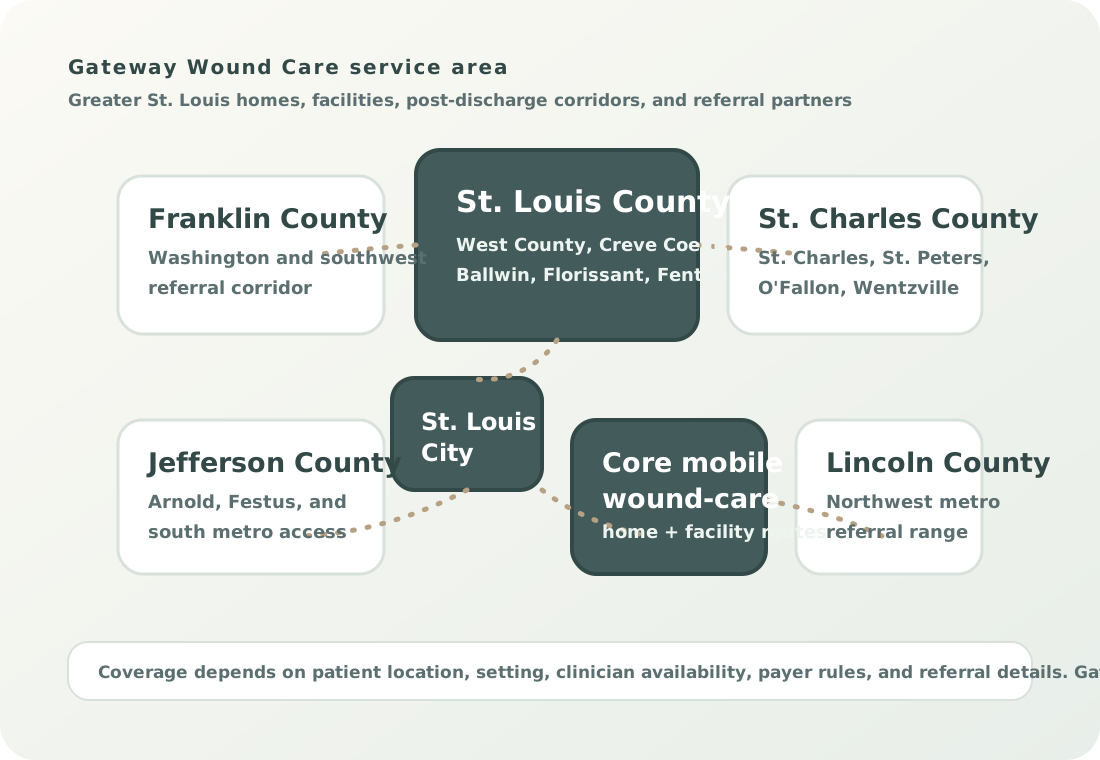
Gateway Wound Care Missouri county coverage map showing St. Louis City, St. Louis County, St. Charles County, Jefferson County, Franklin County, and Lincoln County

Service geography

Greater St. Louis, with focus on homes, facilities, and post-discharge needs.

Gateway provides mobile wound care throughout the Greater St. Louis metropolitan area, bringing advanced wound care directly to patients in skilled nursing facilities, assisted living communities, and private residences.

St. Louis City

Hospital discharge, home health, social work, and complex wound follow-up inside the city.

Learn more

St. Louis County

Chesterfield, Creve Coeur, Ballwin, Town and Country, Florissant, Fenton, and surrounding communities.

Learn more

St. Charles County

St. Charles, St. Peters, O'Fallon, Lake St. Louis, Wentzville, and growing west metro referral corridors.

Learn more

Jefferson and Franklin

South and southwest regional access where transportation barriers and follow-up gaps can become serious.

Learn more

Do not see your community listed? Contact Gateway to discuss service availability.

FAQ

Common service questions

Do you come to my home?

Gateway provides mobile wound care when the case, geography, payer fit, and clinical need are appropriate.

Do I need a referral?

Families may contact Gateway directly, and referral partners may refer patients. Some payer or clinical situations may require provider documentation or coordination.

Do you accept Medicare?

Coverage depends on plan, medical necessity, documentation, setting, and provider enrollment. Gateway verifies benefits and keeps referral sources informed.

How quickly can I be seen?

Timing depends on geography, urgency, clinical information, and scheduling capacity. Start with a request or referral so Gateway can review the next step.

Request Care Refer a Patient